Compare home and school perspectives
See where accounts agree and where they differ. Differences can help identify the situations, demands or support that change a child's experience.
The child ADHD Passport brings the family's account, screening findings and available teacher observations together. It gives parents and school staff a shared starting point for understanding what is difficult and what to explore next.
Free screening · Optional £99 clinician-reviewed Passport · No subscription
See where accounts agree and where they differ. Differences can help identify the situations, demands or support that change a child's experience.
Use reported difficulties with attention, organisation, routines or participation to focus the conversation on the child's needs, rather than relying on a label.
With the family's agreement, the same document can inform conversations with a GP, educational psychologist or another setting, reducing the need to repeat the background.
Note the concerns the family wants help with and the information available at the time of review.
Discuss classroom observations, strengths and existing support. If a teacher contribution was unavailable, treat that as a gap to explore, not evidence that difficulties are absent.
Consider what can be tried through the school's usual support process, how its effect will be reviewed and whether further professional assessment is needed.
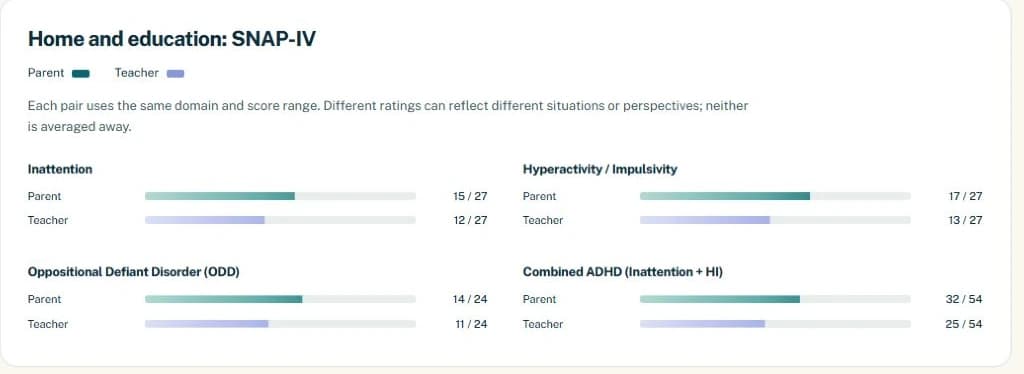
From our complete fictional child sample. Open the full Passport and PDF
The Passport does not diagnose ADHD or determine SEND provision, an education, health and care plan or exam access arrangements. Support decisions should consider the child's needs and the evidence required by the relevant process.
Each issued Passport combines the introduction letter and report in one PDF, digitally certified by Neuro FX Ltd after clinical approval. Its reference and QR code provide a route to check the issued document.
How review and document verification workThe person chooses who receives their copy. Agree a secure way to share it and handle it under your organisation's confidentiality and retention procedures. The verification page does not disclose their questionnaire answers or clinical findings.
Read how ADHDassess handles personal informationRead a complete fictional Passport, including its introduction letter, clinical summary, screening evidence and limitations.